
Reanimated Perfection
A review of "Resident Evil Requiem". A game that is so well-made and paced, it's hard to believe that Capcom, 30 years in, is still delivering generational titles in this series. We are so back!

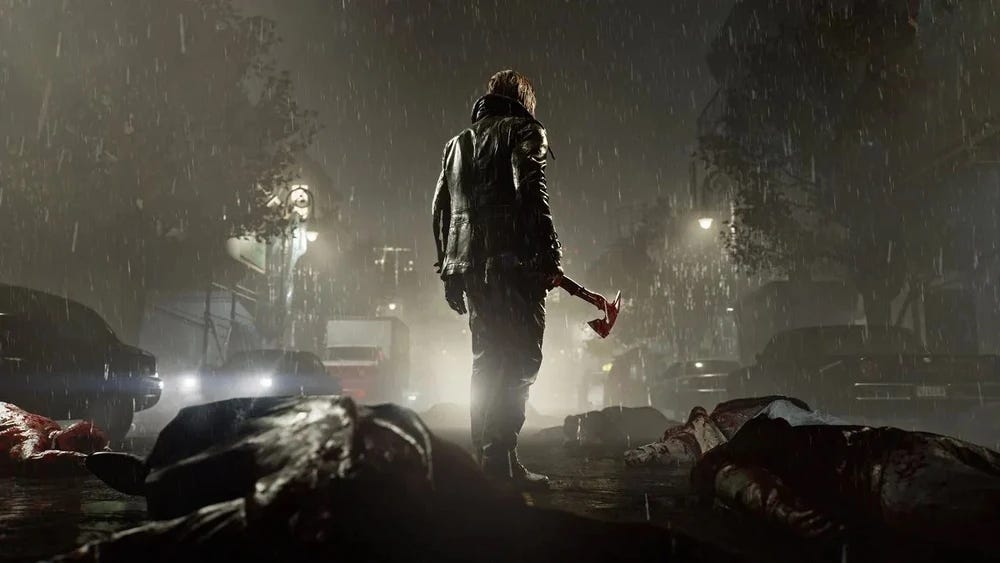
If pressed, I don’t think I could name you a single video game character I like more than Leon S. Kennedy. He’s the best!
I am a huge fan of Capcom. Out of all the years I have been playing video games, I can scarcely think of a better year for genre titles. Big-budget games that thrive on unique themes, genre trappings, or niches have never been more in vogue than this year. There is a particularity to the games that have hit it big, and it’s great to see so much variety in an industry so accustomed to not taking chances. Companies are generally averse to risk because of the reality of a hit-driven business. Why try something new when something old and tried and true has been successful?
Chiefly, the standouts for me in 2026 have been from the prolific and acclaimed Japanese developer and publisher Capcom. This year, they have been killing it. They have felt like one of the only companies that have truly toed the line between commercial success and reinvention, and have made it work for them, while also balancing development timelines and development intricacies successfully. Not only do they innovate in their titles, they also set the standard for how a company should operate in this new, increasingly volatile industry landscape.
I reviewed Pragmata this spring (you should read that review too, by the way), and I loved it. Now, with the release of Resident Evil: Requiem, Capcom has inexplicably struck gold twice in one year, and they even have a new Onimusha coming out in September!! It’s shaping up to be the Year of Capcom, and I think that’s a real testament to prioritizing teams and personnel, rather than on auteurs or big-time directing talent.
At its core, Capcom is the prime example of what you get when you mix primarily two things. The first is a constant, successful innovation of beloved, storied IP (all while retaining key, top talent), and the careful stewardship of said franchises with world-class development pipelines to ensure smoother and easier development environments. No one does it like Capcom, and no one tries! Why not? Investing in your company’s future by making video games when you are a maker of video games just makes sense, right? Capcom thinks so, and it’s executing perfectly, putting every big third-party publisher to shame. They’re just better at what they do, and it’s because they prioritize seasoned developers making classic franchises with a reasonable scope. They make bigger, better games, more smartly and more cost-effectively than other companies in the industry.
Recently, we have been getting a lot of Resident Evil remakes. Which is good, because I love Resident Evil, and I love Capcom. More games from them is good, but particularly in the Resident Evil franchise. Capcom has prioritized delivering a release cadence that satisfies. They’ve been remaking classic games in the franchise, and releasing brand new games in the series, one after the other. It’s a ‘you go, I go’ approach between new and old that has kept getting better and better with every title. This cadence started back almost a decade ago with Resident Evil 7: Biohazard, a huge success for the company. Ever since then, in 2017, almost every year and a half, like clockwork, we have gotten a Resident Evil game, be it a remake or a new entry, in alternating fashion.
It’s been surprising their cadence, not just for how quickly they come out with new games, but just how high-quality each new or remade title is when they hit storefronts. The highest mark they’ve hit as of late, in my opinion, has been with their RE4 remake, itself released in 2023. Their least liked one came just a couple of years before it, with the likes of the RE3 remake (itself a fine game but not as beloved as other projects in their pipeline). But every game they’ve released during this period could be evaluated as a baseline of solid to great titles, though, and the bar of quality for the series has never been higher, as a result. It’s all just clicking.
Actually, since Resident Evil 4 (2023) has come out, the three-year wait between it and the newest entry in the mainline series, Resident Evil: Requiem (itself the ninth mainline title in the numbered entries), is the longest wait between games in this new release cadence since 2017. The last numbered entry was all the way back in 2021, with the release of Resident Evil: Village, the eighth mainline entry in the series (and second part of the primarily first-person Winters’ Duology, coming after RE7). So it’s been a while since the last numbered entry. As a digression, the titles have started becoming cheekier about the hidden numbers in each subtitle, which is a clever thing, I think [“Requiem”: (q/9), Village: (VIII/8, Biohazard: Z/7, for example]. Regardless, it has been a bit of a longer wait between wholly new entries in the franchise. (Also, the announcement to release was under a year from beginning to end; more games need to do this!)
As mentioned in my previous review of Resident Evil 4 (2023), this franchise is my favorite type of video game. Replayable, primarily focused on single-player, of high quality, and damn fun to play. I am pleased to say, then, that Requiem is just as good as the RE4 remake in many ways (if not better in some others), it reinvents the template of the franchise that is Resident Evil, masterfully, 30 years in. Capcom has successfully reinvented their best franchise yet again, all while delivering on years of established lore and storylines. Some of which go all the way back to Resident Evil 2. It’s an out-of-the-park home run of a video game for me and is one of my favorite entries in the series to date.
It’s a bona fide, stone-cold classic of a game that I will hold loftily up high for years to come. It’s some of the most fun I have had with a video game in 2026 and the past couple of years, to boot. Parts of it can be viewed as a bit of fan service, sure— but collectively, given the perfect pacing, impeccable game design, and pitch-perfect campy tone, it’s more than the sum of its eclectic parts. It’s much more, in fact. Dare I say, it is a complete reinvention of the franchise, writ large, 30 years in. It’s a contender for my personal Game of the Generation, itself still held tightly (if not slipping a bit) by 2024’s Metaphor: Re Fantazio, Atlus’ brilliant JRPG epic. Requiem is of a quality barely touched by other triple-A video games of its type, and I shall be gushing about it for months and years to come. It’s like a video game made exclusively for me.
So what’s so good about it? What’s the fuss about, you ask? Well, it’s a big fuss because of just how much gameplay variety there is to be found here. The big thing here that makes this game so special is how it blends the distinct gameplay disciplines of Resident Evil under one roof and how expertly each is balanced against the other. By default, you have two ways you can play this game, with the default being chosen by the developers.
You play as two characters in Requiem (itself not a new feature of the series), with each character’s perspective being tailored by default to an individual play style. You play as both Grace Ashcroft, a new character to the series, and the returning fan-favorite dreamboat: the statuesque ex-cop Leon S. Kennedy (himself more rugged and seasoned after all his years of offing scads of the undead). Grace, primarily by default, plays in first-person, with her segments being the more terrifying portions of the shared adventure (her gameplay is geared to more of the newer style of gameplay found in both RE7 and RE8), and Leon plays normally in a third-person view since he is more tailored towards action and cathartic combat (like gameplay found primarily in both RE2 and RE4).
Capcom balances each gameplay style and discipline perfectly, with each character feeling right at home even when the perspective shifts between default viewpoints. You can, of course, change each character’s perspective in the menus, but personally, why would you? I believe the devs set them as default for a reason, so I never deigned to change them in my playthrough; as I played, it felt more and more like the right choice to stick with the default settings. The game works better that way, even though initially it could feel jarring. But somehow, someway it works, and feels just right.
Another big addition to this new entry is the added behaviors of the enemy types you face throughout the campaign. Every zombie you encounter in the early game sections of the campaign feels new, different, and way scarier. See, the biggest change that Capcom made to these units is making each creature of the dead feel more wholly bespoke and unique in its behavior. Every enemy you encounter in the early game environments feels unique, because they all seem to cling to some vestige of their previous lives. There are shambling nurse orderlies, dutiful undead maids, lumbering butchers stumbling around rotting, and there is even a female zombie that was a beautiful lounge singer in her former life; all these professions and their vocational quirks stick around long after death. Not only does this add flavor to your stock-standard enemies from the afterlife, but it also changes how they move, attack, and gurgle out their creaky dialogue in combat encounters.
Grace is the overwhelmed, underprepared audience surrogate this go around, and while she is resourceful and whip-smart, she is initially woefully ill-suited to take on these new horrors. The early game of RE9 is by far when the game is at its best, and most horrific. You spend the beginning hours of your sections with Grace, sneaking around dimly lit hallways, picking up crafting materials, bits of ammo, unlocking doors, and dodging shambling corpses as you do so. If it weren’t scary enough, every zombie utters unique creepy dialogue depending on their station. The following is an example of a unique situation with a zombie that I encountered during my playthrough as Grace.
During this first Grace section, I encountered a clinic attendant zombie enemy waddling around near a pair of elevators. Here I had two options: attempt to sneak past him while he was muttering about the elevator to himself, down the right path which led to another area of the clinic, or continue down the same hallway to my left into a storage room where I might find resources that I could use to craft useful items. I chose the path to the left, but the only way to make it past without the attendant noticing me was to turn off the light in the hallway, masking my escape into the next chamber. I turned off the light, and to my amazement— the zombie lurched to his immediate right, in my direction. The rotting attendant grumbled to himself, “LIGHTS OUTTT…” and then started walking TOWARDS me, as I crouched helplessly in the dark.
It was terrifying!! It’s by far one of the scariest moments I have ever had playing a game. I shouted: “OH SHIT!” and booked it straight for the room at the end of the hallway. In that moment, I felt a mix of being terrified and being excited. It was thrilling to be scared by a game again once again. I am a seasoned gamer who plays all of the popular, mainstream horror games that I can since it’s my favorite genre, so I have built up a significant tolerance for the routine scares. But here? It really got me! This segment was so well done. I hadn’t even thought the zombie would go and turn the light back on! Because games don’t do that! It’s mechanically complex to do, and most devs don’t even think to do it! Having the zombie react to a choice I made felt incredible. What an amazing innovation on the part of the developers to make the familiar feel new again.
Scary games or horror games do not normally move me in general. I’m rarely scared. I have an iron will when it comes to scary movies too, since I have a very strong constitution when it comes to horror media. I think a lot of it has to do with my experience playing a bunch of horror video games on the regular. When you are wading through hell fighting off or running from denizens of the underworld, merely watching it happen just isn’t nearly as scary. I’ve covered wars, you know? (Frank West, shout out. Capcom, please pay me.)
The Grace segments are the scariest parts of this game, and the beginning might be the most terrifying descent into hell I can remember in a horror game. It’s also filled with moments just like the previous one I mentioned with the attendant. All kinds of unique zombies react in specific ways. I want Capcom to continue making these choices to include elaborate routines and behaviors in their enemy types. Because if they do, and they continue to make each encounter mechanically interesting and aesthetically terrifying in the games that follow, I think it will be to RE’s benefit. The Grace sequences are wonderful and tense. It’s the slow build-up in these segments that leads to the catharsis of the Leon segments. You putter around for hours scrounging up resources and escaping from horrific enemies with Grace, and when you finally head into the next section of the game with her, it cuts back to Leon Kennedy in the clinic, for his turn at clean-up duty. From there, it’s a release of all the pent-up tension that has been building, with Leon’s segments acting as a sort of release valve. He’s here to whoop ass, quip a ton, and look good doing it. This stuff rocks!
Leon plays as good, if not better, here than he ever had in RE4. He may be in his late 40s, but damn if he doesn’t handle as dextrously and as brutishly as he ever has. Leon, at his core, is Resident Evil’s proverbial main character after all— and after years of fighting against hordes of the undead and the various victims of plague, he has learned more than enough tricks to still be worthy of top billing as the capable leading man that he is. Leon is, for all intents and purposes, Capcom’s “Grim Reaper” in everything but name. This man knows how to kill, and how to do it with a style and flair that would make even Dante from Devil May Cry blush. (Hell, why not just give Leon a letter grade while you’re at it?) Leon mutilates, breaks, rips, and stylishly tears apart the army of the undead (and even a handful of Umbrella’s science experiments) in his sections, and he does it with a flair and panache that would even make the Doom Slayer turn several shades of hellish red out of jealousy.
The new tool at Leon’s disposal to accomplish his goal of clean-up duty is his combat axe (or tactical hatchet if you’re being pedantic). This functions similarly to the knife parry in RE4, where you can block melee attacks from enemies if they get too close, turning the tables back in your favor during encounters. It gets hectic at times, too. These undead cronies don’t courteously wait for an opportunity to take a snap at you. So using the axe to stave off these aggressive baddies is extremely useful. Just like the knife in RE2 and RE4, your axe has a durability meter that, when low, needs to get repaired; you do so by sharpening said implement with a big-ass whetstone of all things.
It tickled me to no end to use the axe on an enemy, lower its durability, take a step back, sharpen the axe again, and then take a couple of more hacks at a zombie. It’s incredibly funny to watch in practice, given how impractical the whole act seems in the heat of battle, but this particular thing made me giggle every time it happened. Leon uses the axe a lot in tight situations, so getting a sharpening in between bouts with an undead always looks amusing when it happens.
The game is split into these two disciplines: Grace’s slow-burn classic horror segments, and Leon’s combat arena clean-up sections. There are points where the two deviate from going through the same areas in the middle to late game, but there are points where both inhabit the same spaces at different times. The old mechanic of leaving items for the next person returns here from the original dual protagonist adventures in Resident Evil’s history, and leaving items for Leon as Grace is useful when he is busy doing the sweeping up of whatever Grace left behind. If Grace has picked up damn near every resource, Leon still has specific ways to get items for his parts, with the appearance of locked cabinets that can only be opened with his axe. Grace can’t open these cabinets, which ensures that even if Grace has picked the clinic clean, Leon still has some stuff to use on his side of the adventure. It’s a nice way to ensure that Leon has what he needs regardless of resource crunches in Grace’s segments.
The balance of the resources, the two characters’ viewpoints, and their gameplay differences keep the whole adventure feeling varied and exciting throughout. I liked switching back and forth, and despite how different each segment feels, it all works remarkably well given how different each character’s experience can feel. It’s another successful, well-paced jaunt through yet another dimly-lit house of horrors.
While Resident Evil Requiem is a game that’s good at so many things, it’s especially great at keeping things feeling fresh throughout, which is ironic given the subject matter of decaying corpses and shambling science experiments. Like Leon Kennedy, the series just gets better with time. From start to finish, it’s a raucous, exciting, and thrilling romp that more than keeps your attention for its runtime. My 12-hour campaign felt like it flew by in a flash, and that’s a credit to the stellar direction of the game, how breezy it feels to play, and how engrossing its world and the characters that reside in it can be. It’s one of the very best games in the series, and can stand almost toe to toe with the heights of the storied franchise. Resident Evil doesn’t get much better than this… but damn if I don’t want to see them try.
Thanks for reading.